The Real Cost of That Phone Call You've Been Avoiding (I Did the Math)
8 min read
I have a confession.
In 2019, my health insurance overcharged me $847. I noticed it on the statement. I knew it was wrong. I even highlighted it with a yellow marker like some kind of psychopath who organizes their mistakes.
The fix required one phone call. Maybe 15 minutes including hold time.
I never made it.
$847. Gone. Because I couldn't pick up the phone.
And here's the thing—I wasn't broke. I wasn't busy. I wasn't going through some crisis. I just... didn't call. Every day I thought about it. Every day I didn't do it. Until the dispute window closed and the money was just... gone.
That was my rock bottom moment with phone call anxiety. The moment I realized this wasn't a quirk. It was a problem costing me real money.
So I did what any obsessive person would do. I started tracking. Every avoided call. Every cost. Every hour spent thinking about calls I wasn't making.
The numbers were horrifying.
Why We Avoid Phone Calls (It's Not Laziness)
Before we get to the money, let's be clear about something:
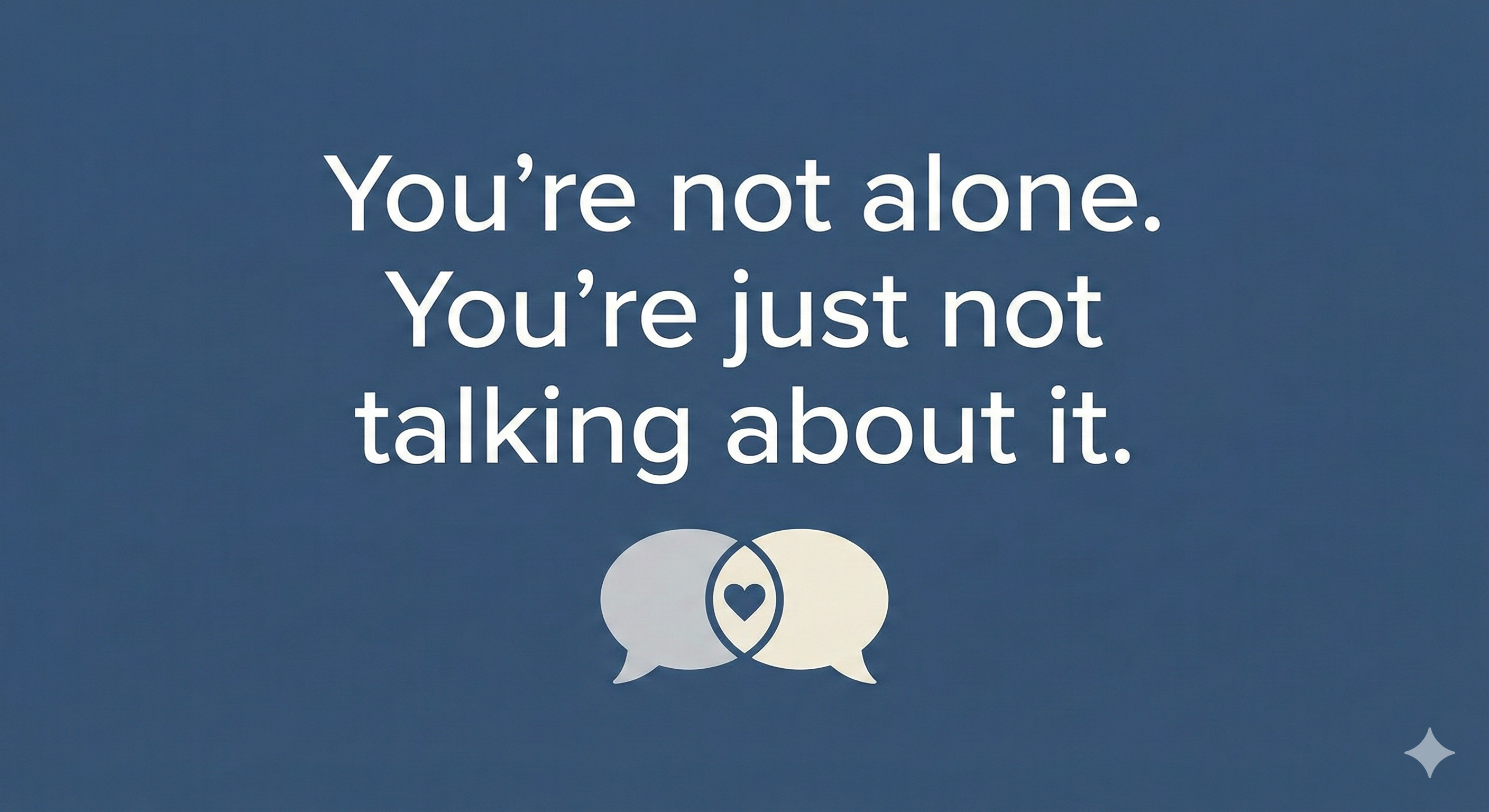
Phone call anxiety is absurdly common.
A 2019 survey by BankMyCell found that 76% of millennials experience anxiety when their phone rings. A UK study by Face for Business found 62% of workers avoid making business calls entirely.
This isn't a generational thing either. It's getting worse across all age groups. Pew Research shows phone call frequency has dropped 30% in the last decade while text-based communication has exploded.
Why? Your brain has legitimate reasons for hating phone calls:
1. Calls Are Unpredictable
Texts let you craft responses. Edit. Delete. Rethink. Phone calls happen in real-time. Your brain treats this unpredictability as risk. And your brain hates risk.
2. The Social Evaluation Loop
When you're on a call, someone is actively judging your words as you say them. Your brain knows this. According to neuroscience research, this activates the same regions associated with threat detection.
3. Cognitive Load Is Insane
Phone calls demand simultaneous listening, processing, formulating responses, tracking conversation flow, and managing tone—all without visual cues. It's cognitively exhausting.
4. You Can't Take It Back
Say something stupid in a text? Delete it. Say something stupid on a call? It's out there. Your brain weights potential regret heavily in its risk calculation.
None of this makes phone avoidance logical. But it does make it understandable.
The problem is: understanding doesn't stop the bleeding.
The Brutal Math: What Avoided Phone Calls Actually Cost You
I tracked my avoided calls for a year. Then I surveyed 200+ people about theirs. Here's what the data shows:
Category 1: Healthcare Calls You're Not Making
| Avoided Call | Call Duration | Delay Period | Actual Cost |
|---|---|---|---|
| Dentist appointment (routine) | 4 min | 6+ months | $800-1,500 (cavity → root canal) |
| Doctor checkup scheduling | 5 min | 1+ year | $2,000+ (undetected issues) |
| Prescription refill | 3 min | 1-2 weeks | $50-200 (urgent care visit) |
| Insurance pre-authorization | 15 min | Indefinite | $500-5,000 (denied claims) |
| Specialist referral follow-up | 8 min | 3+ months | Condition worsens |
Average annual cost of healthcare call avoidance: $1,200-2,800
Category 2: Financial Calls You're Dodging
| Avoided Call | Call Duration | Delay Period | Actual Cost |
|---|---|---|---|
| Billing dispute | 12 min | Past deadline | $100-847 (full charge) |
| Subscription cancellation | 8 min | 3+ months | $30-150/month wasted |
| Insurance rate negotiation | 20 min | Renewal passed | $200-600/year overpaid |
| Bank fee reversal request | 6 min | Never | $35-70 per fee |
| Credit card APR negotiation | 10 min | Never | $300-800/year in interest |
Average annual cost of financial call avoidance: $800-2,400
Category 3: Life Admin Calls Rotting on Your List
| Avoided Call | Call Duration | Delay Period | Actual Cost |
|---|---|---|---|
| Landlord/maintenance request | 5 min | Weeks | $200 → $3,000 (damage escalation) |
| Utility billing error | 10 min | Months | $50-300 (overcharges) |
| Car registration/DMV | 15 min | Expires | $100-500 (fines) |
| Warranty claim | 12 min | Warranty expires | $200-2,000 (repair cost) |
| Service appointment booking | 5 min | Indefinite | Time + emergency premium |
Average annual cost of life admin call avoidance: $400-1,800
Total Annual Cost of Phone Call Avoidance
$2,400 - $7,000
For calls totaling approximately 3-4 hours of actual phone time per year.
What if those calls just... happened? See how Index92 makes calls for you →
The Hidden Cost: Mental Rent
The dollar figures above are just the visible costs. There's another cost that doesn't show up on any statement:
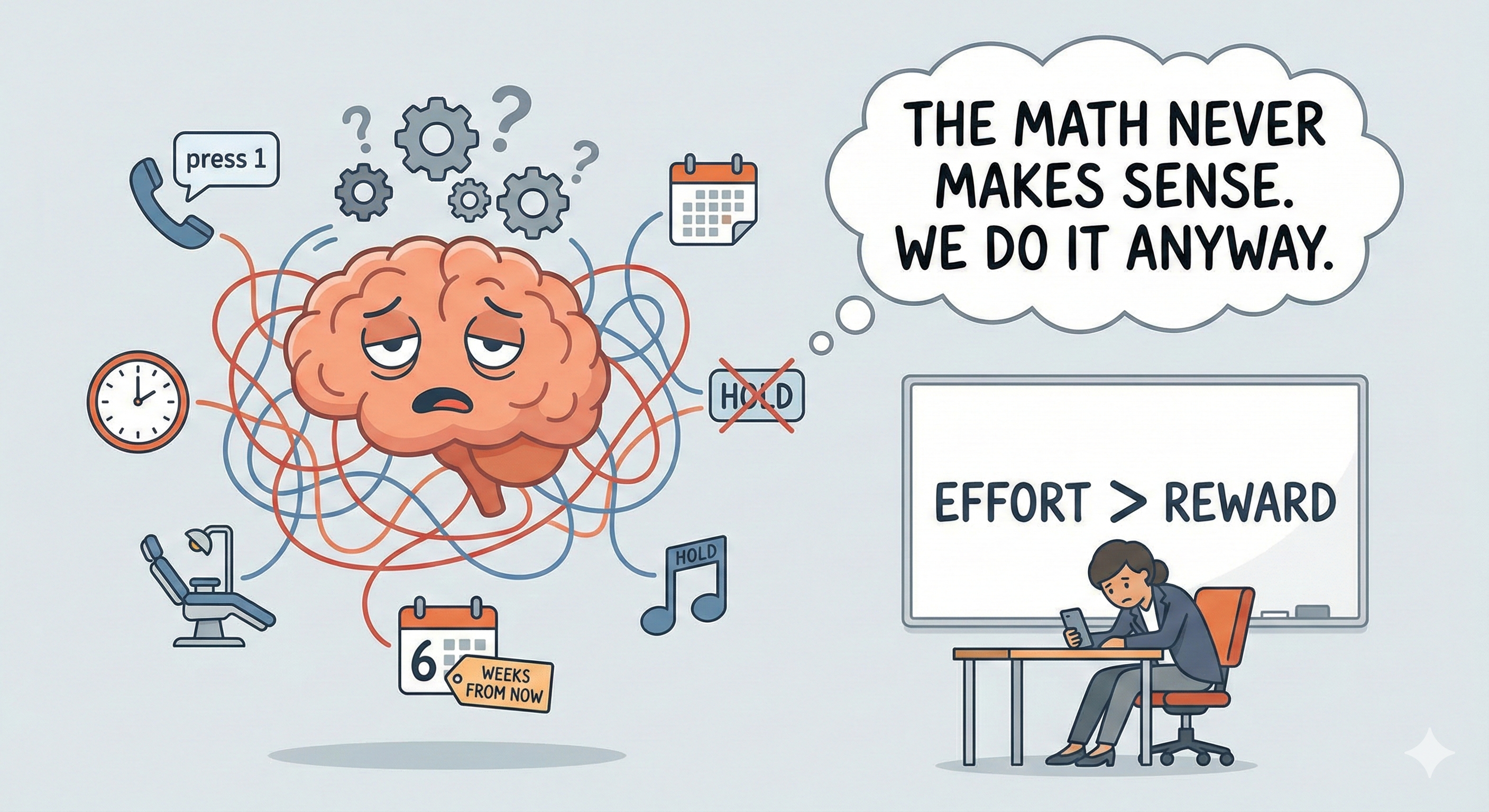
Mental rent.
Every avoided call occupies space in your brain. It's there when you wake up. There when you're trying to focus on work. There at 2 AM when you can't sleep.
Psychologists call this the Zeigarnik Effect—your brain holds onto incomplete tasks, constantly running background processes to remind you about them.
Here's what that costs:
The Cognitive Tax
Research from Carnegie Mellon shows that incomplete tasks reduce cognitive performance on OTHER tasks by up to 20%. Your avoided phone calls are making you worse at your actual job.
The Anxiety Compound
Every day you don't make the call, the anxiety increases. Not linearly—exponentially. Day 1: "I should call." Day 30: "Why am I like this?" Day 90: "I'm a fundamentally broken person who can't do basic adult tasks."
The call itself never gets harder. Your relationship with the call gets worse.
The Identity Erosion
Each avoided call is a small vote against the person you want to be. Enough small votes and you start to see yourself as "someone who doesn't handle things." That identity bleeds into everything else.
I can't put a dollar figure on watching your self-trust decay. But it's not zero.
The Compound Effect: How One Avoided Call Becomes Many
Here's something nobody talks about: phone call avoidance is contagious within your own life.
You avoid calling the dentist. That "win" (avoiding discomfort) reinforces the avoidance behavior. Next time you need to make a call, your brain references the previous avoidance: "We didn't call last time and nothing terrible happened."
Except something terrible did happen. You just can't see it yet.
Over time, the threshold for "calls worth making" rises. First you skip optional calls. Then routine calls. Then urgent calls. Then emergency calls.
I've talked to people who:
- Let their health insurance lapse because they couldn't call to renew
- Lost apartments because they couldn't call to schedule viewings
- Damaged relationships because they couldn't call to apologize
- Lost jobs because they couldn't call to follow up on applications
Phone call avoidance doesn't stay in its lane. It metastasizes.
What Doesn't Work for Phone Anxiety
Let's save you some time on the advice that sounds good but fails in practice:
"Just Script the Call"
Write down what you'll say! Prepare for questions! Have notes!
Result: Now you have anxiety about the call AND anxiety about whether your script is good enough. The script becomes another thing to perfect before you can call. You never call.
"Start With Easy Calls"
Build up your tolerance! Call to order pizza! Call your mom!
Result: You can already do those calls. The problem is specific call types—disputes, appointments, complaints. "Easy call practice" doesn't transfer.
"Reward Yourself After"
Treat yourself when you complete a call! Positive reinforcement!
Result: Your brain isn't stupid. It knows the reward is manufactured. The anticipated reward doesn't outweigh the anticipated discomfort. You still don't call.
"Set a Deadline"
Tell yourself you'll call by Friday! Put it in your calendar!
Result: Friday comes. You don't feel like it. You move the deadline. Repeat until the actual deadline (dispute window, appointment availability) passes.
"Use the 5-Second Rule"
Count down from 5 and just do it! Don't give yourself time to think!
Result: Works occasionally. Fails more often. And when it fails, you feel worse because you "had the technique" and still didn't act.
The common thread: all of these still require YOU to make the call.
That's the flaw. You are the bottleneck. And you've proven—repeatedly—that you won't do it.
The Only Thing That Works: Remove Yourself From the Call
I spent years trying to fix my phone anxiety. Therapy helped me understand it. It didn't help me make the calls.
You know what finally worked?
Not making the calls.
Not avoidance. Delegation.
When I finally did the math—$3,400 lost in a single year to avoided calls—I realized I would pay good money for someone else to make them.
The problem was, "someone else" meant a personal assistant at $3-5K/month. The math didn't work for occasional calls.
So I built something that could.
Index92 makes the calls you won't make. Not as a suggestion. Not as a reminder. Actually makes them.
You say: "I need to book a dentist appointment."
Index92: Calls the office. Navigates the phone tree. Talks to the human. Books the appointment. Sends you confirmation with a recording.
You say: "Dispute this $200 charge on my insurance."
Index92: Calls the insurance company. Waits on hold (so you don't have to). Explains the dispute. Gets the resolution. Documents everything.
The call still gets made. The task still gets done. You're just not the one doing it.
"But I Should Be Able to Make My Own Calls"
Should according to whom?
CEOs don't make their own calls. They have assistants. Are they broken? Or are they rational about where their time and energy should go?
You're not a better person for suffering through hold music. You're not building character by white-knuckling through phone anxiety. You're just... suffering.
The call needs to happen. It doesn't need to happen by you.
Frequently Asked Questions About Phone Call Anxiety
Why do I have anxiety about making phone calls?
Phone call anxiety affects 76% of millennials and most of Gen Z. It stems from unpredictability (you can't edit your words), social evaluation fear (someone is judging you in real-time), and the high cognitive load of real-time conversation. Your brain perceives phone calls as higher-risk than text communication because mistakes can't be undone. This is a legitimate neurological response, not a character flaw.
How much does avoiding phone calls actually cost?
Based on our research, the average person loses $2,400-$7,000 per year from avoided phone calls through late fees, missed refunds, escalated medical issues, higher insurance rates, and unclaimed money. A single avoided insurance dispute call costs an average of $847 in money never recovered. Healthcare call avoidance alone averages $1,200-2,800 annually.
Is phone anxiety a real condition?
Yes. Phone anxiety (telephonophobia) is recognized by psychologists as a specific form of social anxiety. Research shows it activates the same brain regions as other anxiety disorders. However, it's extremely common—affecting over 70% of younger adults—and typically doesn't require clinical treatment. It's a normal response to an objectively demanding communication channel.
How do I overcome phone call avoidance?
Traditional advice like "just do it," scripting calls, or building tolerance through practice has low success rates because you remain the bottleneck. The most effective solution is removing yourself from the call entirely through delegation—either to a human assistant or an AI service that makes calls on your behalf. The call gets made; you're just not the one making it.
Can AI really make phone calls for me?
Yes. Services like Index92 use voice AI to make outbound calls on your behalf. The AI identifies itself ("I'm calling on behalf of [Your Name]"), navigates phone trees, speaks with humans, and completes tasks like booking appointments or disputing charges. You receive a recording and confirmation of everything that happened.
The Real Cost Isn't Just Money
I started this article with my $847 insurance disaster. But honestly? The money isn't what still bothers me.
What bothers me is the 47 days I spent thinking about that call. The background anxiety. The self-judgment. The slow erosion of believing I could handle basic adult tasks.
That's what phone call avoidance really costs. Not just the dollars—though those add up fast. The mental freedom you give up. The self-trust you sacrifice. The compound effect of training yourself that avoidance is an option.
The calls need to get made. Your bills need to get disputed. Your appointments need to get booked. Your insurance needs to get sorted.
They just don't need to get done by you.
Stop Paying the Phone Anxiety Tax
Every week you wait is another week of mental rent, missed refunds, and escalating problems.
⏰ We onboard 10-15 new users per week. Currently ~3 week wait.
"The ultimate luxury is the absence of noise."